

Xanthelasma – Treatment
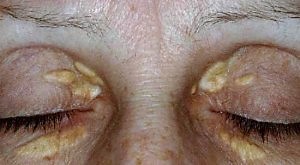
Xanthelasma appears on the upper eyelids near the bridge of the nose and on the lower eyelids as yellow-orange plaques on the skin’s surface. These plaques contain fat and develop due to high levels of cholesterol or blood lipids (triglycerides).
In about 50% of cases, xanthelasma occurs due to hereditary causes. The size of the yellow plaques ranges from 2 to 30 millimeters. They appear in middle-aged individuals of both sexes, more frequently in women, and very rarely in children and adolescents.
Xanthelasma can gradually increase in size or number, and in rare cases may cause pain or itching.
Xanthelasma are benign and completely harmless lesions, and their removal is usually for cosmetic reasons and, less often, for functional reasons.
They can be removed either with PLEXR non-surgical blepharoplasty, under local anesthesia without any scarring, or through surgical excision.